|
To be read in the last issue of Subterranea: A new unknown underground refuge in the Vendée department of France
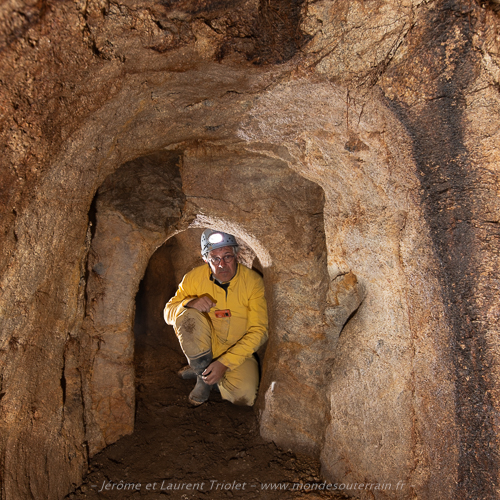
The La Mignardière underground refuge is located in the Vendée department of France. Practically complete but in poor condition, it is carved into very weathered granite and was previously unknown. It is approximately 48 m long and comprises an access corridor defended by three loopholes and leading into a series of large corridor rooms. It has architectural similarities to the souterrain of the former fortress of Le Fief, located less than 300 m away, but its active defence suggests that it may be of a later date.
Un nouveau souterrain-refuge de Vendée inédit : La Mignardière au Poiré-sur-Vie, Subterranea n°196, p. 18-25, 2025.
Download the publication
|
|
Iran: Nothing new under the Rock!
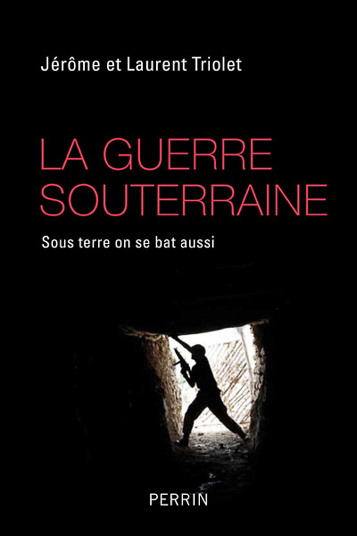
What is happening in Iran is exactly what we wrote in the conclusion of our 2011 book, La Guerre souterraine (underground warfare).
Nothing new under the Rock! At the end of World War II, the Germans had also buried industrial arsenals for the V1 and V2 rockets in underground quarries. What we need to understand is that today’s two adversaries, the United States and Iran, have been preparing for this confrontation for a long time, and each has put their skills on the line: absolute control of the skies for the Americans, and the stealth and resilience of underground facilities for the Iranians. There are countless historical examples that have already demonstrated the resilience of underground structures. The Japanese hiding in the caves of the Pacific atolls, and more recently the Palestinians in the tunnels of Gaza or Lebanon… The only way to flush them out is to go in on the ground, but it’s deadly…
Over the past forty years, two models have been clashing and cancelling each other out with metronomic regularity! On the one hand, the Western ‘detection-destruction’ approach from the air, which is highly effective at striking ground targets, and on the other, the ‘secrecy-robustness’ model operating underground.
Jérôme and Laurent Triolet, Friday 29 May 2026
About this topic and in light of recent events, Jerome gave an interview to Guillaume Malaurie, a columnist for the French magazine Challenges.
|
|
New topic in the Photo Library: Armorican Souterrains of the Iron Age (France)
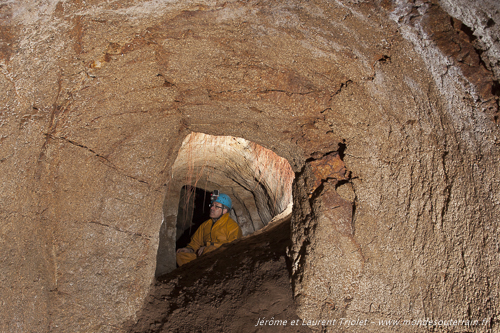
A large number of souterrains (underground passages) dated from the Iron Age (6th - 2nd century BC) have been studied and excavated in Brittany. These Armorican souterrains are mainly found in the west of the peninsula and are the work of the Celtic populations who occupied the region at the time: the Osismii, the Veneti and the Coriosolites. Characteristic of these territories and this period, these cavities opened under the enclosed farms which then dotted the west of Brittany. Dug into crystalline rocks, schists, gneiss and altered granites, they most often consist of an access shaft leading to several rooms dug in a row and connected to each other by narrow or even bottleneck passages. Due to their great age, more than 2100 years, very few of these underground structures are still intact and accessible. We studied or visited some of them. In our opinion, the characteristics of these structures relate them to the group of underground refuges.
The book Des monuments sortis de l’ombre, les souterrains-refuges [Jérôme and Laurent Triolet, Errance & Picard publishing house, Arles, 2022] includes a chapter devoted to Armorican Souterrains of the Iron Age.
Visit the Photo Library
Publication about the topic: Un souterrain armoricain de l’Âge du Fer : le souterrain de la Ville es Peniaux
|
|
Presentations at the international congress in Tollet (Grieskirchen, Austria), 17-19 October 2025
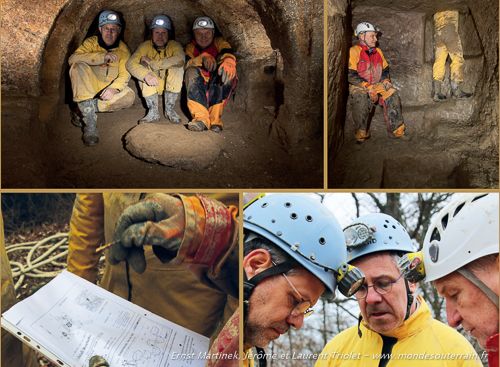
At the invitation of Josef Weichenberger, we will take part in the international congress Internationale Erdstalltagung which will be held in Tollet (Grieskirchen, Upper Austria) on 17-19 October 2025. We will give two lectures: Underground refuges around the world and 10 striking images from 40 years of studying souterrains.
This Internationale Erdstalltagung is organised by the Erdstallzentrum Tollet Unterstetten (Austria) and the Arbeitskreis für Erdstallforschung (Germany).
Watch the film shot during the congress
Photo gallery dedicated to the underground refuges of Bavaria and Austria
Künstliche Höhlen in aller Welt als Zufluchtsanlagen; 6. bis 21. Jahrhundert; Jérôme und Laurent Triolet
Die französische Bezeichnung „souterrain-refuge“ definiert eine spezifische Kategorie von Hohlräumen, die unterirdisch in den Fels gehauen wurden. Sie bildeten befestigte Annexbauten zur Siedlung an der Oberfläche, wurden in ländlichen Gegenden während unruhiger Zeiten angelegt und dienten dazu, eine Gemeinschaft sowie ihre Lebensgrundlagen zu schützen. Diese unterirdischen Zufluchtsorte verfügten über Versorgungseinrichtungen, die das Überleben der Bewohner sicherten, ihren Komfort verbesserten und es ermöglichten, Tiere sowie Vorräte unterzubringen. Ebenso gibt es dort Verteidigungsanlagen, teils sehr ausgeklügelt, welche die Flüchtenden vor Eindringlingen schützen sollten.
Die nach diesem Modell angelegten unterirdischen Anlagen finden sich in mehreren Ländern. Wir befassen uns mit acht Gruppen solcher Hohlräume, die wir in unserem jüngsten Buch Souterrains du monde vorgestellt haben. Sie verteilen sich über drei Kontinente und wurden zwischen dem 6. und dem 20. Jahrhundert angelegt.
|
|
Presentation at the 47th French Society for Souterrains Studies congress, 26-28 September 2025, Saint-Martin-la-Pallu (Vendeuvre-du-Poitou, Vienne, France)
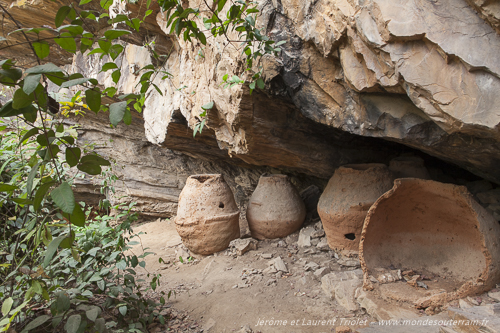
We will take part in the 47th congress of the Société Française d’Étude des Souterrains (French Society for Souterrains Studies) which will be held in Saint-Martin-la-Pallu (Vienne, France) on 26-28 September 2025. On Sunday 28 September, we will give a lecture: Refuge caves, granary caves and sacred caves of Northwestern Benin.
In Northwestern Benin, the Atakora Mountains conceal rock shelters and small caves which local populations used until the early 20th century as places of refuge, for hiding reserves, and even for fighting against colonial power. This tradition, which is found in neighbouring Togo, dates back to at least the 18th century, as the inhabitants of these regions were subjected, before the colonial period, to incessant raids by horsemen in search of slaves and grain. In the Atakora, as elsewhere in West Africa, caves and other cavities also often have a sacred and magical character, and some cavities combine protective and religious functions. During our first trip to Benin in 2014, we visited and studied some of these sites, which are steeped in history and beliefs.
|
|
“The hidden life” in the Swiss magazine LVX
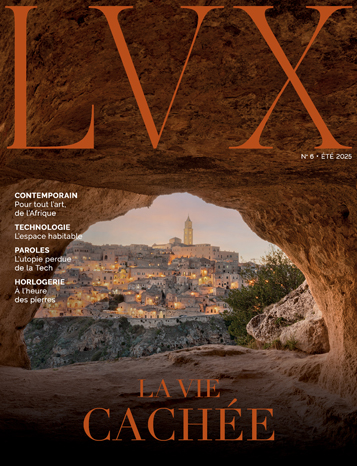
On the occasion of the publication of our new book about Souterrains of the world, Souterrains du monde, we gave a long interview to Philippe Chassepot for the Swiss magazine LVX.
“Underground tunnels, galleries, and other cavities have long served as refuges for threatened or persecuted populations. A fascinating world brought to light by researchers Jérôme and Laurent Triolet, internationally recognised experts in the field.
The two brothers grew up in Touraine, a region rich in underground tunnels into which they fell as if they were Obélix falling into his cauldron of magic potion. Their hobby then turned into a consuming passion from adolescence onwards.
The Triolets have visited many countries, with one constant in their observations: human ingenuity always surpasses the imaginable, especially when the task seems insurmountable.”
Read the article |
|
Meeting about the book “Souterrains du monde ”, Bookstore La Boîte à Livres (Tours, France) Thursday 5 June 2025, 19: 00
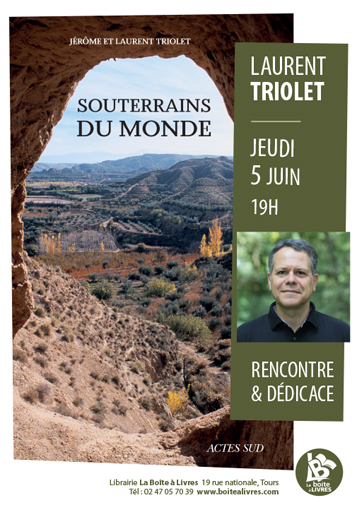
Laurent will present our new book Souterrains du monde during a meeting at the bookstore La Boîte à Livres.
Venue: La Boîte à Livres, 19 rue nationale, 37000 Tours (France) - tél. : 02.47.05.70.39 - www.boitealivres.com
Souterrains du monde, Jérôme and Laurent Triolet, Actes Sud publishing house, Arles, 2025, 17 x 24 cm, full colour book, 160 pages, 130 illustrations (photos and figures), written in French, 29 €. |
|
Report: For 40 years, they have been cataloguing and exploring Souterrains…

On the occasion of the publication of our new book about Souterrains of the world, Souterrains du monde, Philippe Tanger and Garo Kevorkian, who are journalists for France Television, accompanied us on a visit to two underground refuges located in the region of Tours (France).
Watch the film |
|
New topic in the Photo Library: Underground refuges in Bavaria and Austria
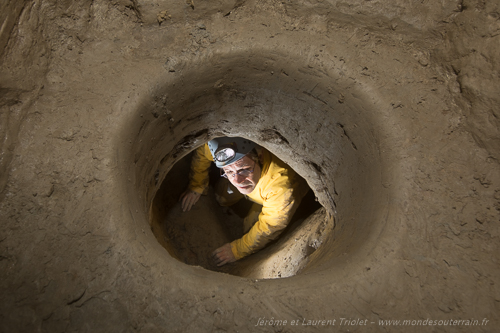
Bavaria and Austria, more precisely Upper and Lower Austria in the north of the country, are particularly rich in medieval underground refuges.
They are locally known as Erdstall, Erdställe in the plural. This specific name dates back to at least the 15th century. German and Austrian researchers have surveyed more than 300 of them, and we visited some of them with our colleagues and friends Dieter Ahlborn and Josef Weichenberger. While some of the cavities in Lower Austria are similar to the underground refuges found in western France, those dug in Bavaria and Upper Austria, particularly around Passau, are characterized by an unimaginable narrowness and the presence of vertical bottleneck passages whose diameter is sometimes barely 40 cm. Crossing such obstacles is often difficult and always impressive, even for experienced explorers.
Visit the Photo Library
Watch the film shot in Unterstetten Erdstall |
|
Just published: On the trail of the men with tails. What a West African mining legend tells us about the past activity of the Gounoudoudji iron mine, in Benin
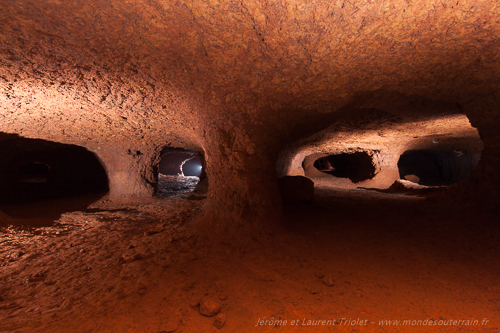
Near Dogbo, in southern Benin, the Gounoudoudji iron mine has a marked industrial feature. It is part of a gigantic steelworks complex that was apparently in operation until the early 16th century, and reminds us that iron production was intense in the region before the arrival of Europeans. A curious legend, still very much alive today, associates it with men with tails who are said to have exploited it and lived there. Their tails were such an embarrassment that they were even forced to dig a hole behind their stalls to hide them in the ground when they came to sell their produce on the market...
Similar legends of men with tails can be found elsewhere in Africa and in Asia too. Ascribing a part of animality to those who lived at the edge of the known world or on the margins of society - like the metalworkers because of their disquieting skills - they are, above all, markers of the unknown and otherness. At Gounoudoudji, this legend of men with tails has guaranted the memory of the place passing on to the present day the memories and industrial practices of the miners and metallurgists who worked there some 500 years ago.
Sur la piste des hommes à queue. Ce que nous dit une légende minière ouest-africaine de l’activité passée de la mine de fer de Gounoudoudji au Bénin, Subterranea n°195, p. 234-245, 2024.
Download the publication
Visit the Photo Library
|
|
Souterrains du monde is now in Bookstores
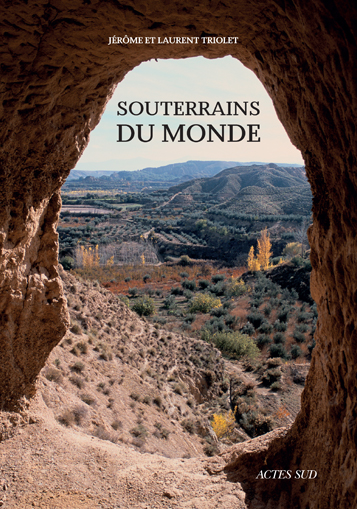
Our new book about Souterrains of the world, Souterrains du monde, has just been published on March by Actes Sud.
Almost everywhere in the world, human groups facing periods of prolonged insecurity have dug, with great effort, ingeniously organised underground refuges (“souterrains-refuges”) to disappear from the surface, shelter and defend themselves underground.
The authors invite us to discover these discreet monuments with their unique architecture, in France, Ireland, Bavaria and Austria, Benin, Cappadocia, Spain and Vietnam, as well as in Afghanistan, Lebanon and Gaza.
Souterrains du monde, Jérôme and Laurent Triolet, Actes Sud publishing house, Arles, 2025, 17 x 24 cm, full colour book, 160 pages, 130 illustrations (photos and figures), written in French, 29 €. |
|
New topic in the Photo Library: 40 Years of Explorations and Studies
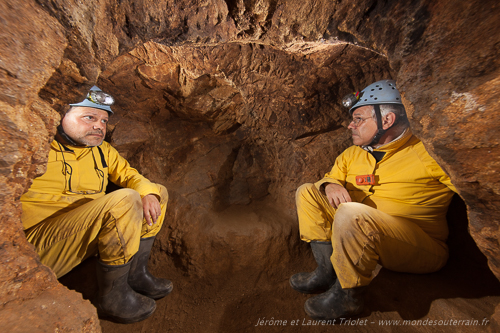
In 1984 and 1985, our exploration of a series of souterrains (underground refuges) in the region of Tours (France) marked the transition from a teenage passion for underground refuges to the rational study of these cavities. From the outset, we were motivated by the desire to share our knowledge and our understanding of what we already considered to be a social phenomenon that had left its mark on the Western France countryside during the Middle Ages.
This would open the doors of a world that could hardly be imagined, which never ceased to surprise and amaze us. This would lead us on an unbroken and always renewed quest for cavities across France, but also elsewhere in Europe, Turkey, West Africa, Iran and Vietnam. A quest that would take us on uncommon adventures, provide us with exceptional encounters, make us write a lot and gradually turn us into specialists in the subject.
To mark this anniversary, we have completed the souvenir album opened in 2017 for the 30th anniversary of our first book.
Visit the Photo Library
|
|
New pictures in the Photo Library: Cave dwellings in Loire Valley (France)
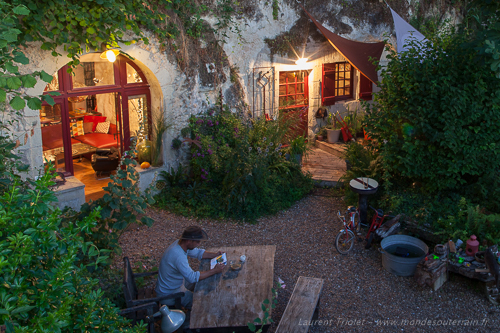
The cave dwelling groups all the facilities of a traditional house on surface but it is dug in the cliff. The chimney does not stay on the roof but it pierces the ground on the top of the hill. Sometimes there is a whole village which is hidden in the rock: streets, shops, farms, and also church.
In the Loire Valley, there are still people who live in cave dwellings today. These modern cave dwellers are returning to the singular way of life adopted by many villagers during previous centuries.
Visit the Photo Library
|
|
On Instagram: Nature and Subterranean World
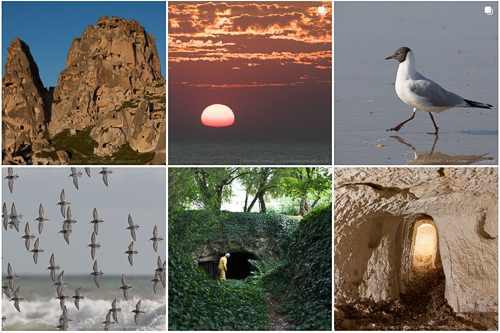
Recently launched, Laurent’s account created to share, in natural and artificial light, the wonder aroused by the nature and the rock-cut underground world.
Visit the account |
|
Just published: Mondes souterrains, 20 000 lieux sous la terre
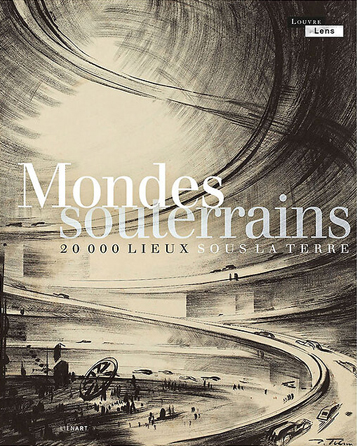
Subterranean Worlds 20 000 Leagues Under The Earth
This large format art book is edited by Alexandre Estaquet-Legrand, Jean-Jacques Terrin and Gautier Verbeke, This is the catalogue of the exhibition Subterranean Worlds, presented at the Louvre-Lens museum, from March 27 to July 22, 2024. Subterranean Worlds reflects the exceptional plurality of the 200 artworks thus gathered and offers an initiatory path which begins at the bottom of the abysses, to discover these universes which have come to illuminate the world above.
The book includes also several unpublished contributions about the diversity of the subterranean worlds and we are writing the text Living and taking refuge in the rock (Vivre et se réfugier dans la roche).
Mondes souterrains, 20 000 lieux sous la terre, edited by Alexandre Estaquet-Legrand, Jean-Jacques Terrin and Gautier Verbeke, co-publishing Lienart éditions with the musée du Louvre-Lens, Paris, Lens, 2024, 23 x 29 cm, 392 pages, 400 illustrations, written in French.
|
|
In Austrian Souterrains with Josef Weichenberger
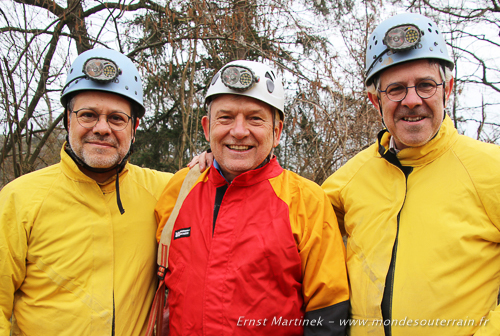
Most recently, we had the pleasure to visit some Austrian Souterrains guided by our friend and colleague Josef Weichenberger who has been studying these cavities for 40 years. In Austria as in Bavaria, the specific and ancient name Erdstall is used to designate these Souterrains that were for the most part functioning as refuges. These cavities are characterized by their small dimensions: they feature very narrow creep-holes that lead to small rooms with seat-niches for refugees.
During this trip, Martin Fickert made a little film inside the underground refuge of Unterstetten in Upper Austria. This video allows perceiving the extreme smallness of these cavities.
Watch the film
|
|
Subterranean Worlds Exhibition in Louvre Lens Museum
What is happening underground? What do these worlds that have been firing our imaginations since the dawn of time look like?
Veering between the ideas of death and fertility, ignorance and knowledge, our relationship to subterranean worlds has evolved throughout the history of civilisation and from one artistic current to the next, reflecting developments in our societies above ground. Like an inverted mirror, these realms are the province of things we hide and things we bury, things we fear and things we love, things we do not know and things we can foresee, things we are repelled by and things that inspire us. Their legends and myths, as well as their realities and riches, embody the various contradictions of the human soul.
Featuring more than 200 works, this exhibition, in which the arts from every period dialogue with each other, reveals the full extent of the ambivalence and the fertility of these worlds.
On the occasion of this exhibition Subterranean Worlds, we are very pleased to present four of ours photographs; four pictures of underground refuges (souterrains-refuges) in France, Ireland and Benin.
Looking for souterrains in France and elsewhere in the world, we discovered the diversity and the beauty of this unusual heritage. We are convinced that the diggers of these cavities took pleasure in expressing themselves in the three dimensions of the rock mass and were concerned about the beauty of their work. From the beginning we appreciated the aesthetic dimension of this rock cut architecture and we sought to transmit this emotion through our photographs. We are delighted to share with the Louvre Lens visitors our view of these exceptional monuments.
SUBTERRANEAN WORLDS - Temporary Exhibition 27 March – 22 July 2024
More information
|
|
Presentation at the 45th French Society for Souterrains Studies congress, 9-11 June 2023, Chinon (Indre-et-Loire, France)
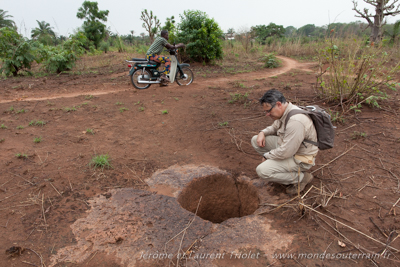
We will take part in the au 45th congress of the Société Française d’Étude des Souterrains (French Society for Souterrains Studies) which will be held in Chinon (Indre-et-Loire, France) on 9-11 June 2023. On Sunday 11 June, we will give a lecture: The Souterrains of the Kingdom of Dahomey.
This presentation in Chinon about African Souterrains will be dedicated to the memory of Professor Raymond Mauny, an eminent specialist of West Africa archaeology and history and also the founding president of the French Society for Souterrains Studies.
In Benin, country of West Africa, around the historic city of Abomey, large areas comprise numerous circular holes piercing the lateritic crust and forming real well fields. Each of these holes is the opening of a vertical shaft which gives access to one or several rooms dug below. The first cavities were accidentally discovered in 1998, during the construction of a road. Professor Klavs Randsborg and his Beninese-Danish team conducted many archaeological prospections and excavations campaigns in the cavities located around Abomey. Thanks to these investigations, they have dated the souterrains to the period of the Kingdom of Dahomey (17th-19th centuries) and they have attributed a defensive function to most of them. These cavities are a special type of refuges souterrains (underground refuges) organized around an access shaft. They are independent but grouped in high density clusters which cover very large surfaces. According to tradition, they had a military function, and their names in the Fon language confirm that. The souterrains took part in the violent history of the Kingdom of Dahomey and its neighbours, during continuous conflicts and razzias conducted to seize goods and slaves. Two study tours, one with Inga Merkyte and Søren Albek, collaborators of the late Klavs Randsborg, allow us to better understand the architecture and the defensive organization of these underground complexes. |
|
Six pages about Souterrains in the French magazine Sciences et Avenir
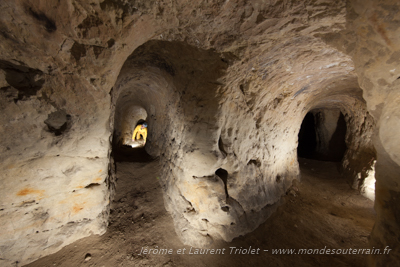
On the occasion of the publication of our new book, the journalist Marine Benoit accompanied Laurent in a Refuge Souterrain located in the region of Angers.
The report is published in the May issue of the French magazine Sciences et Avenir - La Recherche. |
|
Just published: Des monuments sortis de l’ombre, les souterrains-refuges
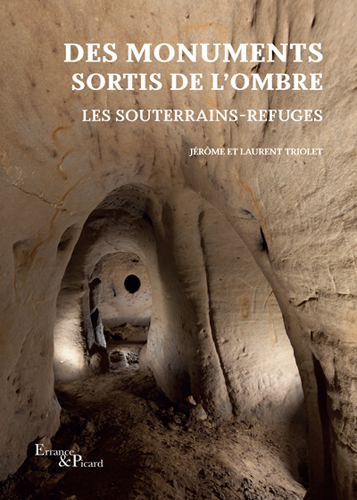
Our new book, Des monuments sortis de l’ombre, les souterrains-refuges, has just been published on September 2022 by Errance & Picard.
Souterrains, known for unexpectedly appearing due to collapse, are also witnesses to a distant past. These are not simple cellars or large extraction galleries, but a category of cavities quite apart. Today there are at least 1,600 of them among thousands of others, not yet discovered or disappeared forever. In the middle of the 18th century, these unusual underground structures aroused the curiosity of some scientists. From the following century, a handful of scholars show that most of them are in fact underground shelters dug by rural populations to protect themselves during times of insecurity. Some of these pioneers insist on the ingenuity of their designers and wonder at the quality of this rock-cut architecture. But, nearly two hundred years later, underground refuges remain unknown, as if these exceptional monuments suffer from their first quality: discretion.
After years of visiting, studying and comparing them in different French regions and in other countries, Jérôme and Laurent Triolet devoted a first global study of underground refuges in 1995. Since this work, the literature relating to souterrains has been considerably enriched. With the contribution of new old texts, regional syntheses, monographs, exchanges with other researchers and numerous excavation reports, they are now addressing the issue of underground refuges in France in greater depth, with a better overview of the phenomenon and new questions. Taking an interest in underground refuges in the world also leads to consider those existing in France as the expression of an even more widespread phenomenon, which concerns various periods and continents. This new work helps to better measure the heritage value of these hidden monuments.
Des monuments sortis de l’ombre, les souterrains-refuges, Jérôme and Laurent Triolet, Errance & Picard publishing house, Arles, 2022, 17 x 24 cm, full colour book, 304 pages, 187 illustrations (143 photos and 44 figures), written in French.
|
|
Just published: Underground refuges and “Underground Cities” in France and Cappadocia (Turkey)
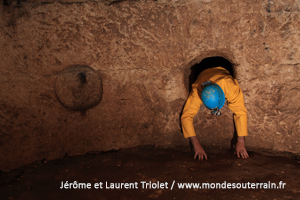
This article published in German, English, French and Czech in the new version of the German journal Der Erdstall is the lecture presented at the Second International Troglodytic Architecture Conference in Iran organised by The Research Institute for Cultural Heritage and Tourism and held in Tehran (Iran) on 7 and 8 October 2015.
The underground refuges consist of rooms connected by corridors; they are equipped with vital facilities and defence systems. The underground refuge concept has been developed in several ways and, in some parts of the world, men have made very complex subterranean networks: the “underground cities”. We have studied two examples of “underground cities”: the wide networks that exist in Cappadocia (Turkey) (8th - 15th century), and the large refuges located in Northern France (15th - 18th century). The study of the architectural characteristics and the global organisation of the networks allows to reconstruct the defence and the life inside the cavities. The comparison shows that the existing differences between these two geographical groups of “underground cities” are the result of two kinds of human adaptation in response to the same need.
Underground Refuges and “Underground Cities” in France and Cappadocia (Turkey), Der Erdstall, Fachzeitschrift für Erdstallforschung und Montanarchäologie, n°47, p. 62-84, 2021.
Download the publication
|
|
A new topic in Photo Library: Cave dwellings in Lanzarote (Canary Islands)
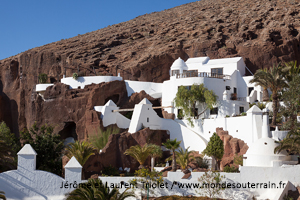
Lanzarote is a black and red land emerging from the waters of the Atlantic, off the Sahara coast. The island is the result of an intense volcanic activity and it is impossible to ignore the presence of the volcanoes which occur everywhere in the landscape. The last volcanic eruption dates from 1824 and the population still remember the terrible history of the Timanfaya eruption that began in 1730 and continued for more than 2000 days, covering about one third of the island surface and radically changing its physiognomy. It is the second largest lava eruption recorded within historic time after the Laki eruption (Iceland). Specific caves - the lava tunnels - are dispersed in this volcanic landscape. If the magma is fluid enough, it flows quickly and it cools and solidifies only as it comes into contact with the outside. The lava crystallizes on the edges of the flow, developing a hard crust whereas the lava is still liquid in the center. When the lava flow has ceased, the solidified walls delimit a lava tube, that is, a tube surrounding a large or small central cavity. When the artist César Manrique returned to Lanzarote in 1968, he incorporated other kind of lava caves in the building of his home and studio. He thus created an absolutely unique rock cut house. This prolific artist, who established through his work a veritable dialog with nature and landscapes, devised also a vast house dug into a cliff.
|
|
A new topic in Photo Library: Journey to the Center of the Earth (Iceland)
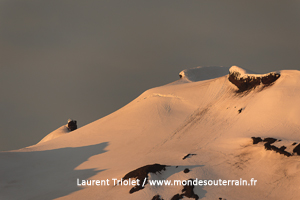
The famous Journey to the Center of the Earth imagined by Jules Verne begins in Iceland within the Snæfellsjökull crater. It is an encrypted message from a 16th-century Icelandic alchemist that shows the way : “Descend, bold traveller, into the crater of the jokul of Sneffels, which the shadow of Scartaris touches before the kalends of July, and you will attain the centre of the earth; which I have done, Arne Saknussemm.” Once arrived at the top of the volcano, Professor Lidenbrock, his nephew Axel and their Icelandic guide enter the central chimney determined to reach the centre of the earth. After a long journey throughout the underground world, the three explorers go out at the other end of Europe, in a chimney of the erupting Stromboli. While the adventure takes place in natural and volcanic caves, with the Journey to the Center of the Earth, Jules Verne perpetuates the myth of long distance tunnel, a myth that is always very present in contemporary collective imagination.
|
|
New topic in the Photo Library: Souterrains and caves in Benin
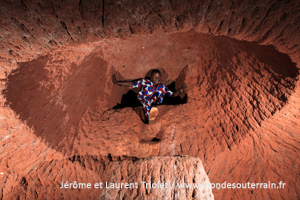
Benin, this small country of West Africa with a rich history, has an exceptional underground heritage. In the South of the country, around the historic city of Abomey, former capital of the Kingdom of Dahomey, there are innumerable souterrains-refuges (underground refuges) of a special type. These cavities have been revealed in 1998 by Professor Klavs Randsborg and his Beninese-Danish team. The density of these souterrains is very impressive: more than 1000 cavities have been listed in this region. In the North of the country, natural caves and rock shelters have been used as refuges or places of worship; traditional ceremonies are still taking place in some of them.
Souterrains around Abomey
Around the former capital of the Kingdom of Dahomey, large areas comprise numerous circular holes piercing the lateritic crust and forming real well fields. Each of these holes is the opening of a vertical shaft which gives access to one or several rooms dug below. The first cavities were accidentally discovered in 1998, during the construction of a road in Bohicon. Professor Klavs Randsborg and his Beninese-Danish team conducted many archaeological prospections and excavations campaigns in the souterrains of Bohicon and in many other cavities located around Abomey. Thanks to these investigations, they have dated the souterrains to the period of the Kingdom of Dahomey and they have attributed a defensive function to most of them. In fact, these cavities are a special type of souterrains-refuges (underground refuges) organized around an access shaft. They are independent but grouped in high density clusters which cover very large surfaces and certainly could shelter all the local population. The souterrains were part of the violent history of the Kingdom of Dahomey and its neighbours, a history of ongoing conflicts and razzias conducted to seize goods and slaves. In 2014, a study tour led us to understand the scale of the phenomenon. At present, we are working with Inga Merkyte and Søren Albek, collaborators of the late Klavs Randsborg, with the aim of better understanding the architecture and the defensive organization of these underground complexes.
Caves in Northern Benin
In the North of Benin, in Donga and especially in Atakora, the nature has carved rock shelters and deep caves in the cliffs. The inhabitants of surrounding villages used these cavities to hide from enemies during local conflicts and also to escape the French army during the colonial period; additionally, they concealed their reserves inside big silos made of crude earth. Some of the caves are also sacred sites and they are still accommodating fetishes and religious ceremonies.
Visit the Photo Library
|
|
New topic in the Photo Library: Tropical troglophiles
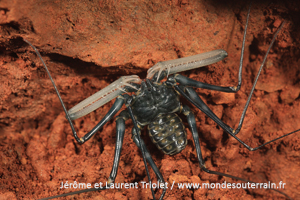
In the intertropical zone, subterranean environment is still characterized by its stability and it preserves from extreme heat. It also protects from the drying effects of sun rays and provides a habitat constantly saturated with humidity which is much sought after by some species. Numerous invertebrates, which are troglophile, can spend their entire biological cycle inside the cavities, other, which are subtroglophile, take shelter only temporarily under the ground. Like in aboveground habitat, biodiversity increases significantly around the equator and the size of arthropods is impressive.
|
|


